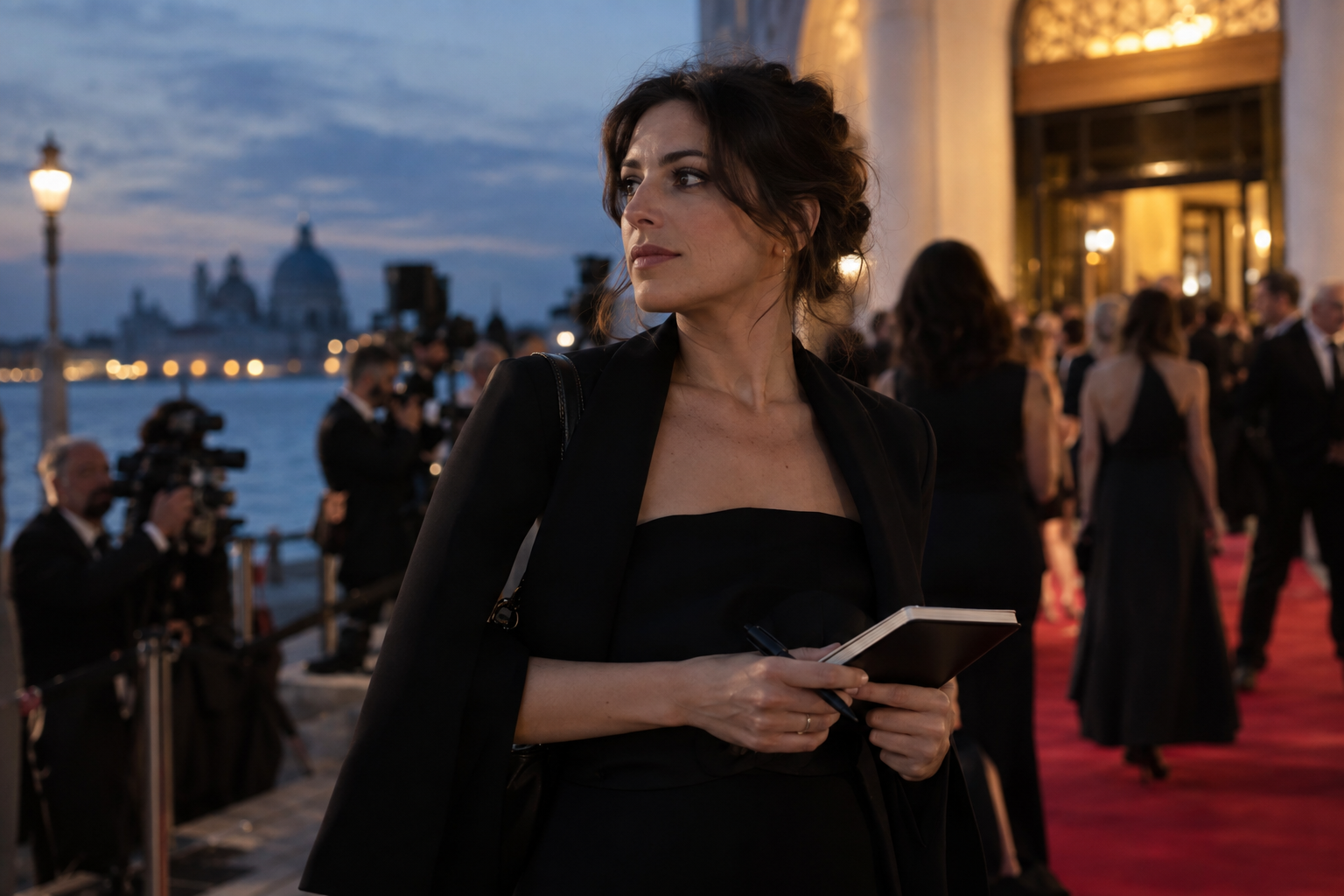
The red carpet on the Lido has been rolled away and the vaporetti have gone back to carrying commuters, yet the consequences of eleven days in Venice are only now settling over the awards calendar. The 83rd Venice Film Festival, which ran from September 2 to 12, ended with a verdict few forecasters had pencilled in: the Golden Lion went to “Woman Unknown,” a Danish drama by May el-Toukhy that had not appeared on the press’s last-minute list of sure-fire winners.
The film follows a maid in post-war Denmark whose relationship with a German soldier during the occupation threatens her future. El-Toukhy was the only woman to direct a competition title on her own, and she is only the eighth woman to take the festival’s top prize. Her lead, Mathilde Arcel, also collected the Volpi Cup for best actress, a pairing that juries rarely agree on. Denmark has since entered the film in the Academy’s international feature category, which puts it on the road to the 99th Academy Awards on March 14, 2027.
The win carried a message as heavy as the trophy. Before the festival even opened, the lineup had been criticised for its thin female representation, the lowest in five years according to Variety, and jury president Maggie Gyllenhaal raised the issue on day one. Accepting her Lion, el-Toukhy called the situation a systemic issue, noting that women are made to compete against one another instead of against their male peers. Whatever happens in March, that speech is already the festival’s lasting soundbite, and a quiet warning to programmers planning their 2027 slates.
Hollywood’s attention, however, has drifted to the acting races. John Malkovich won the Volpi Cup for best actor for Martin McDonagh’s “Wild Horse Nine,” a dark comedy in which he and Sam Rockwell play CIA officers dispatched to Easter Island in 1973, shortly before the coup in Chile. The film drew a thirteen-minute ovation, and Malkovich, 72 and still without an Oscar, now enters the season with real momentum. He was absent from the ceremony, but remarks relayed on his behalf thanked McDonagh and his “sidekick” Rockwell. Venice has form here: it helped launch the best actor campaigns of Brendan Fraser and Adrien Brody, and eight of the last ten lead acting Oscars went to performances first seen on the Lido.
Quieter, yet potentially more consequential, is the arrival of Lee Chang-dong’s “Possible Love,” which took the Grand Jury Prize and is South Korea’s submission for the same international feature race. Two Venice laureates will now meet in one category, a rivalry that distributors will watch closely. Then there is Ilya Khrzhanovsky’s “DAU,” a three-hour-and-fifteen-minute project two decades in the making, which earned the Silver Lion for best director. Awards like that are a test of nerve for the industry: it is one thing to honour an uncompromising work and another to persuade voters, and cinemas, to sit through it.
This is where Venice’s real power lies. A prize on the Lido works less as a verdict than as a marketing engine. For a Danish-language period drama, a Golden Lion can mean the difference between a modest arthouse run and a proper international rollout, with streamers and specialty labels now bidding on perception as much as on quality. The festival was also noticeably lighter on major Hollywood studio titles this year, which left room for European and Asian cinema to dominate the conversation and may encourage the Academy’s growing international membership to look beyond its home market.
The big names that left empty-handed matter too. Danny Boyle’s “Ink,” the Rupert Murdoch drama that opened the festival, and Robert Pattinson’s “Primetime” were both considered prestige contenders, and neither took a major prize. Yet Venice awards are not Oscar nominations, and early buzz for Pattinson, for one, has not gone away. The festival’s founding lesson, repeated by director Alberto Barbera, is that “Gravity” premiered here in 2013 and went on to win seven Oscars. Venice launches campaigns; it does not finish them.
The mood of the closing night was not only strategic. George Clooney and Ellen Burstyn were honoured with Golden Lions for lifetime achievement, and the ceremony paused to remember British producer Jeremy Thomas, an Oscar winner for “The Last Emperor,” who died the day before at 77. Italian film archivist Gianluca Farinelli reminded the room that Thomas loved cinema made by humans, not by artificial intelligence, a remark that echoed through a season in which the future of the craft is as much a topic as its past.
Now the campaign machinery takes over. Submissions to the Academy closed on September 30, the autumn festivals are moving on to their own premieres, and nominations remain months away. The Lido has done what it does best: not crown an Oscar winner, but sharpen the questions. Can a woman’s story of wartime shame beat the established auteurs? Will voters reward a veteran actor’s late-career comedy? And will a risky, towering film like “DAU” find its audience? For now, Venice’s boldest dreams are in the water, heading for Hollywood.