Coco Gauff has spent most of her career being told she is the future. This summer, Elena Rybakina made her sit with the present. In Toronto and then again in New York, the Kazakh beat the American from a set down, without drama and without a flicker of panic, and then carried that calm all the way to the US Open title and the top of the world rankings.
The first lesson came in August at the National Bank Open. Rain pushed the semifinal deep into the night, and Gauff, the fourth seed, grabbed the opening set 7-5 with a crowd firmly on her side. Rybakina, seeded second, simply stopped missing. She took the next two sets 6-2, 6-2 and closed the match just before one in the morning. New York would not let it be a blip.
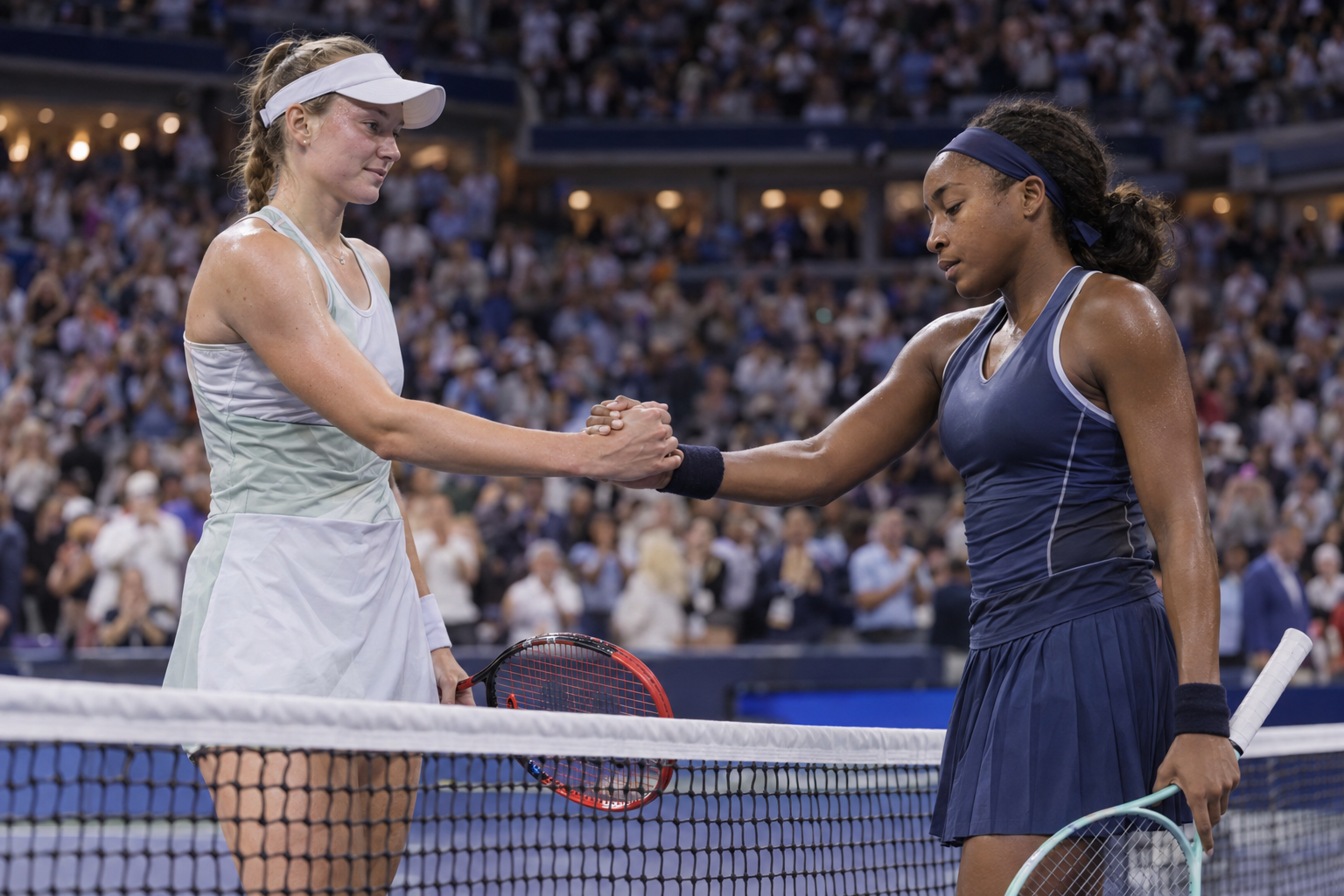
On September 10, inside a sold-out Arthur Ashe Stadium, the script looked familiar for a set. Gauff served beautifully, hit four aces and won 76 percent of her service points, while Rybakina sprayed 18 unforced errors and lost the set 6-3. Rybakina later said she took a deep breath and told herself she had to fight.
In the second set she broke for 3-1 and held for 4-1. Gauff answered with a break of her own and levelled at 4-4, only to serve at 4-5 and lose the game and the set after a double fault and a forehand into the net. The third set offered a cruel replay. Gauff broke Rybakina when she served for the match at 5-3 and screamed, the stadium answering, then went to serve at 4-5 once more. A Rybakina volley made it 15-40, and on the first match point an overhead Gauff would normally put away drifted long. The match ended 3-6, 6-4, 6-4 in just over two hours.
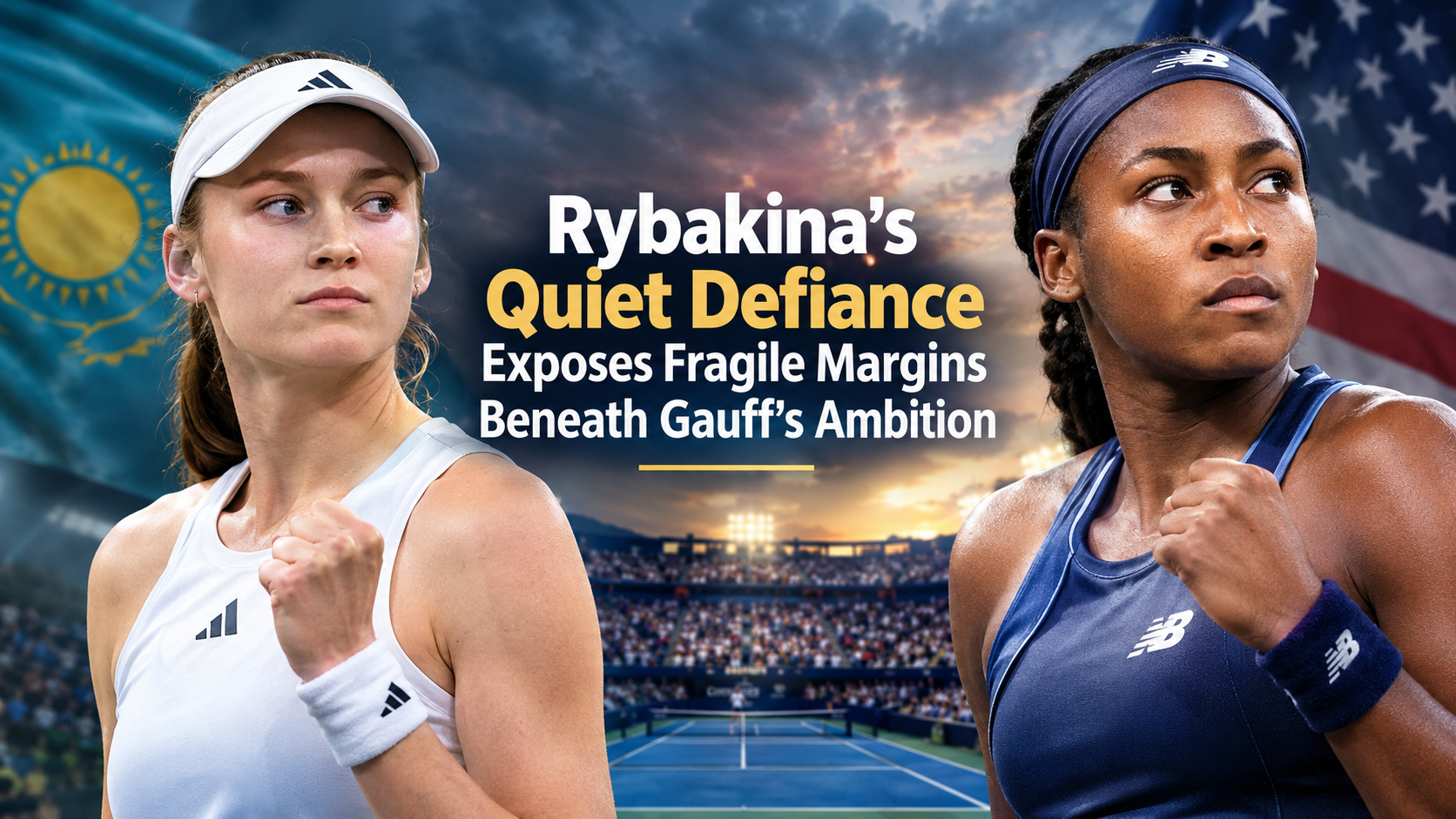
What makes Rybakina so uncomfortable to face is that her defiance makes no noise. She does not theatrically fist-pump through bad patches. She keeps swinging at the same heavy, flat targets, as if she has already forgiven herself for the next mistake. Serve and forehand that big can erase a sloppy set with one break, so patience is strategy, not virtue. Gauff, whose game is built on movement, depth and consistency, is at her most dangerous when rallies are a puzzle. Against Rybakina they became a test of nerve, and nerve is where the evening was decided.
The hard truths for Gauff are specific, and none of them is fatal. The first is the 4-5 problem: twice in one night she stood one game from forcing a deciding moment and twice she gave the serve away. The second is the absence of a second plan. When she led, she dictated; when Rybakina turned aggressive, she had few ways to change the shape of the match. The third is emotional bookkeeping. A twenty-two-year-old with two Grand Slam titles and a WTA Finals trophy already knows how to win big matches, yet in the last two meetings with Rybakina the biggest points slipped through her fingers. She also lost the Miami final to Sabalenka this year, which suggests the issue is finishing against the heaviest hitters, not one rival.
For Rybakina, the semifinal was a launching pad. Two days later she beat Aryna Sabalenka 6-4, 5-7, 6-2 in the final, ending the two-time defending champion’s bid for a third straight title in New York. It was her third major, her second of 2026 after the Australian Open, and it came with a record $5.5 million Grand Slam cheque and the number one ranking. There is a neat irony here: Sabalenka had won 19 straight in New York since losing to Gauff in 2023, and the woman who stopped Gauff ended Sabalenka’s reign.
The consequences reach well beyond one bracket. Rybakina now leads the head-to-head with Gauff 2-1, and both of her wins have come from behind, which gives her a psychological edge the rankings cannot measure. The top of the women’s game has narrowed into a sharp rivalry between Rybakina and Sabalenka, with Gauff standing just outside it, fast enough to stay in view and not yet decisive enough to join it. For American tennis, the wait for the next homegrown champion feels longer. For Kazakhstan, the title is a moment of national pride.
Still, it would be a mistake to treat Gauff’s losses as collapses. In Toronto she was one set up. In New York she was one point from taking control more than once. The distance between the two women this season has been measured in a handful of rallies, and that is exactly what makes the lesson so valuable. Margins that thin can be repaired with a steadier second serve, a rehearsed answer to the overhead, a clearer plan for the moments when momentum arrives and refuses to stay.
Rybakina will carry the crown into the closing weeks of the season and into the new year as the player everyone must solve. Gauff will carry something just as useful, a precise map of where the next big match is waiting to be won.