Brent crude climbed to roughly $116 a barrel on Friday, its highest point since May, while the American benchmark pushed past $101. The war involving Iran is nearing its eighth month, and an oil market that spent the summer convinced the worst had passed is leaning toward the edge once more.
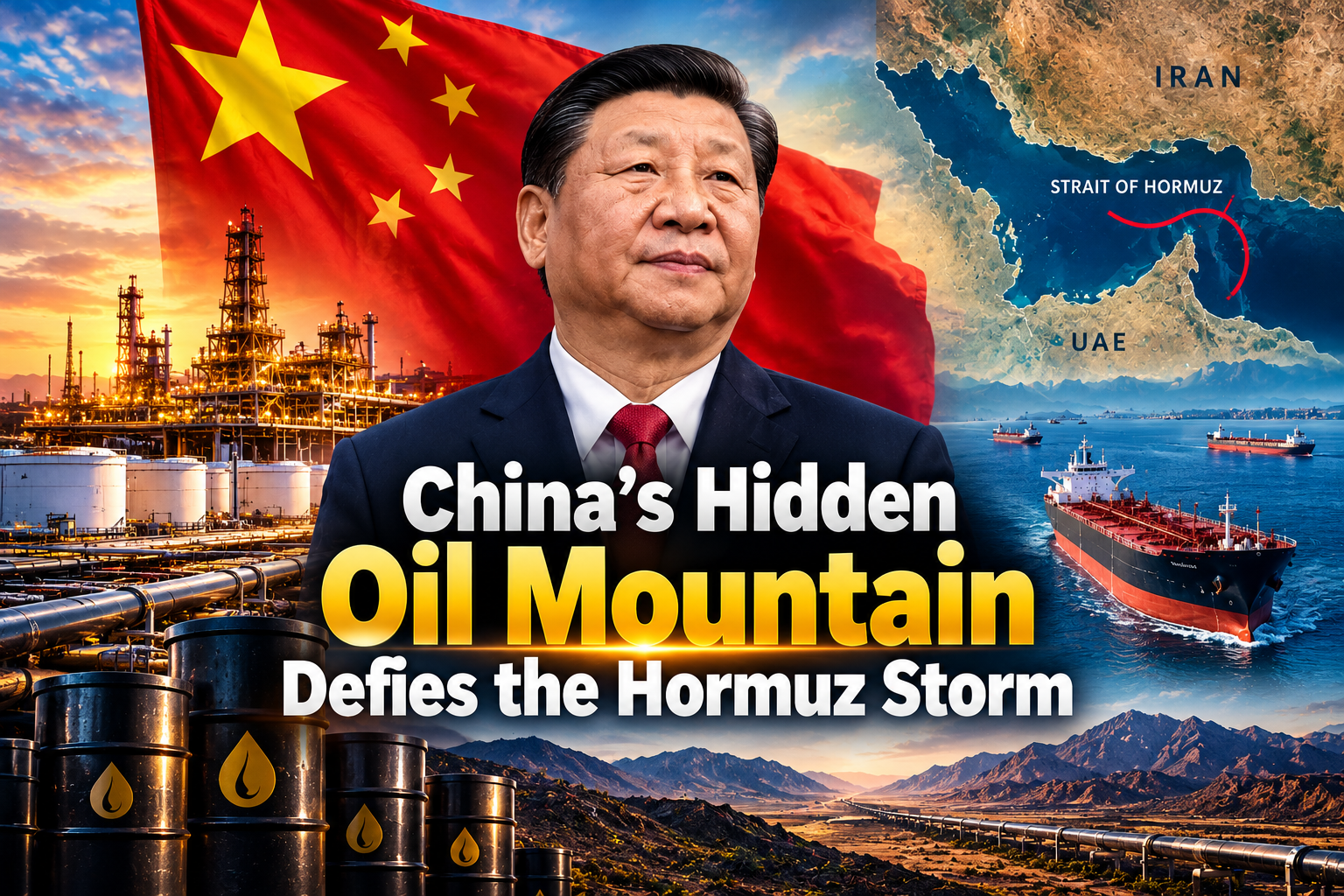
The strange part is that the barrels are moving. Ship-tracking firm Kpler estimates that Gulf exports, counting pipelines that bypass the strait, averaged more than 24 million barrels a day in the week to October 18, above the pre-war average of 23.3 million. Traffic through the Strait of Hormuz itself, however, still sits well below its old level, and on the worst days only a handful of tankers have crossed. Supply is arriving by detour, and detours cost money.
A market that trades on fear, not scarcity
What traders are really buying and selling is risk. Iran’s Revolutionary Guards say naval mines have turned back vessels using routes Tehran has not approved. British officials counted at least nine attacks on shipping in the first weeks of October alone. Insurance premiums, freight rates and war-risk surcharges have swollen so far that a single supertanker charter has reportedly reached $82 million. Goldman Sachs warns that punishing freight costs are squeezing Asian refiners and could eventually lift pump prices everywhere.
That is why this crisis feels different from a classic shortage. A shortage empties tanks. This one inflates invoices. Oil that cannot be insured is, for practical purposes, oil that does not exist, and the gap between a barrel loaded in the Gulf and a barrel delivered in Asia is now measured in dollars and nerves.
A summer of false dawns
About a fifth of the world’s oil consumption normally passes through the strait, which explains why every headline moves the screen. Prices sank to around $70 in mid-June after Washington and Tehran signed a memorandum of understanding and flows recovered to roughly three-quarters of pre-war levels, according to Fitch Ratings. Then fighting resumed in July, Houthi strikes hit Saudi energy infrastructure in September, and crude vaulted back above $100.
The safety net is thinning as well. The International Energy Agency’s record 400-million-barrel emergency release, agreed in March, has delivered about 325 million barrels, with roughly 100 million still to come, and the agency has said members will not add to it. Governments that burned through their cushions in spring have less to burn in winter.
The country that bought its insurance early
If the world is feeling the heat, China is feeling it through a thicker wall. For nearly a year before the war, Beijing bought crude it did not immediately need, adding an average of 1.1 million barrels a day to strategic inventories in 2025, according to US government estimates. Analysts put the total at about 1.4 billion barrels at the outbreak of the conflict, enough for roughly three months of imports and several times the size of the American strategic reserve.
Beijing also reduced its exposure in advance. Vortexa data shows the share of China’s seaborne crude passing through Hormuz fell from 39 percent in 2025 to about a third, helped by heavy purchases of Russian oil and a willingness among independent refiners to take sanctioned barrels.
Then it played the crisis quietly. China is not a member of the IEA and joined no emergency release. It slashed imports to a decade low in June, restricted exports of refined fuel, trimmed refinery runs and began drawing down tanks in May. By August its stockpile was still estimated at around 1.2 billion barrels, and imports were rebounding. Chatham House calculates that about 60 percent of the shortfall left after the Western releases was met from storage, the rest by simply using less oil.
There is another advantage that rarely makes the headlines: opacity. China publishes no inventory figures, so the world trades on guesses. Every analyst’s estimate of Chinese tanks, 1.2 billion barrels or 1.3, becomes a quiet input into the oil price. A hidden reserve works like a poker player’s stack. Its size is unknown, so it shapes everyone else’s behavior. Beijing can slow its buying and let prices cool, or resume and add support, without saying a word.
The bill that arrives at the pump and the boiler
For importers without such a cushion, the damage is spreading through ordinary life. Americans are paying about $4.29 a gallon, $1.22 more than a year ago, with midterm elections adding political heat. Canada’s inflation rate has risen to 3.1 percent as fuel oil prices jumped 58 percent. Europe enters winter with gas storage short. Analysts say Europe, India, Japan, South Korea and Southeast Asia are all more exposed than China.
The longer-term consequences may be the most lasting. Gulf producers are racing to build pipelines to ports outside the strait. Consumers in Asia are rethinking dependence on seaborne crude. High prices are speeding China’s shift toward electricity, which could turn today’s reserve into a one-time buffer for an economy that needs less oil each year.
The strait may eventually reopen in full. The habits it has forced on governments, refiners and households will not close so easily.