Erling Haaland’s tap-in at the back post gave ten-man Manchester City a 1-0 win at Old Trafford on 13 September, and within hours the officials’ own governing body was telling Manchester United the goal should never have counted. The apology arrived by statement that same evening. It changed nothing on the scoreboard and almost everything about how the result will be remembered.
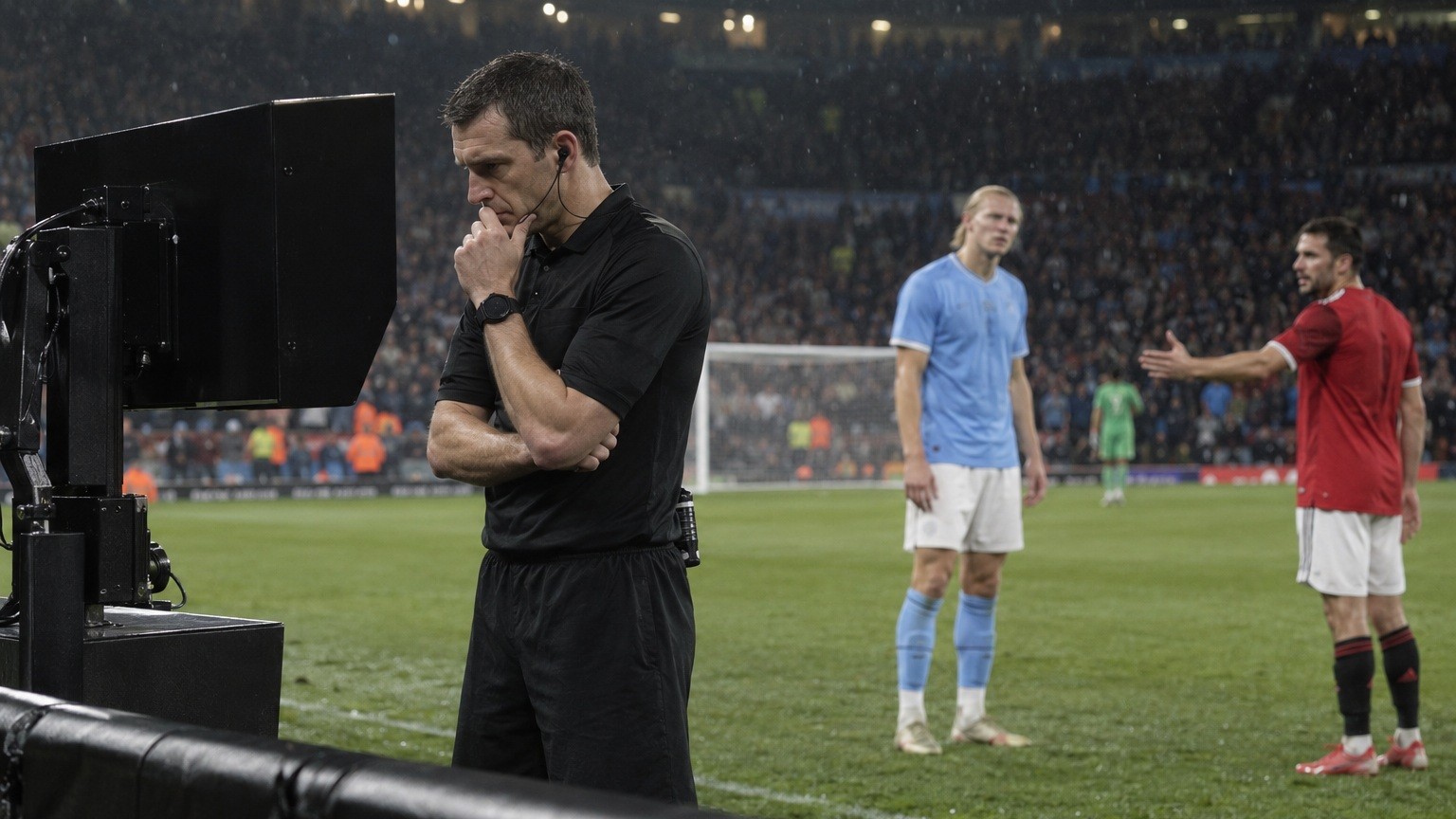
The sequence is simple enough. Around the hour mark, Josko Gvardiol swung a cross towards the far post. Enzo Fernandez, standing in an offside position, dived at the ball and missed it by inches. Haaland arrived behind him and finished. The assistant referee raised the flag against Haaland, and then VAR took over, and the afternoon turned strange.
Matt Donohue and his assistant Blake Antrobus poured their effort into proving Haaland was onside. He was, by roughly three centimetres, according to Howard Webb, the chief refereeing officer at Pro Ref. Having settled that, they confirmed Fernandez never touched the ball and told the referee to award the goal. What they skipped was the question the laws actually pose: did a player in an offside position, lunging for the same cross, take away Lisandro Martinez’s chance to defend it? Webb called it tunnel vision. The system measured a sliver of space with enormous care and overlooked a body flying across the penalty area.
Therein lies the uncomfortable irony of modern officiating. Semi-automated offside technology is designed to remove doubt about lines, yet it cannot remove doubt about judgment, and interference is a judgment. The sharper the machine becomes at what it can measure, the greater the temptation to treat that measurement as the whole answer. A three-centimetre verdict feels like a conclusion when it is only a first step.
Reaction was swift. Gary Neville predicted an apology before one came. Roy Keane argued that United were punished for holding a good defensive line, and Jamie Carragher said the officials seemed fixated on Haaland. Pro Ref’s statement went further than the pundits expected, conceding that the VAR should have recommended an on-field review, the step that would have sent the referee to the monitor to see Fernandez for himself.
Fairness demands a wider view of the day. Earlier, Phil Foden was sent off for kicking out at Bruno Fernandes, a decision several pundits, Micah Richards among them, believed was also mishandled, and it went in United’s favour. United then hit the post twice and still could not break down ten men. So the afternoon contained two contested calls pointing in opposite directions, with the final scoreline rewarding the second. That does not excuse the error, but it complicates any tidy story of one club wronged by a faceless system.
For Haaland the episode is an awkward footnote. His ninth Premier League goal in Manchester derbies was clean in every way that concerns him, because no striker is asked to rule on a team-mate’s position behind him. Still, the goal will carry an asterisk in United’s memory. For City, whose season under Enzo Maresca began perfectly, a flawless start now includes three points the referees themselves say were awarded in error.
The consequences have been quieter but telling. Webb promised a review of the process. Donohue was moved to EFL duty, taking charge of Championship fixtures between Derby and Wrexham, and Southampton and Bolton, and he returns to the Premier League this Saturday as assistant VAR for Coventry against Fulham. Antrobus was back on the line at Newcastle against Aston Villa last weekend. Some will see sensible proportion, since one mistake should not end a career and officials who fear punishment will not make brave calls. Others will ask whether a few weeks of rotation sends any message to clubs who pay for these errors in points.
There are practical fixes within reach. A dedicated interference checker, a second VAR whose only job is to scrutinise every offside-positioned player in the attacking phase while the main check runs, would stop one pair of eyes from becoming the only pair. An automatic on-field review whenever such a player moves towards the ball in the same phase would take the decision out of a single official’s head. And clearer, faster public explanation, with the audio released promptly, would let supporters judge the process rather than guess at it.
Football keeps promising that technology will make arguments disappear. Old Trafford offered the opposite lesson. The obvious thing, a midfielder diving for a cross in plain sight of tens of thousands, was missed by the people with the most cameras. VAR was never supposed to replace common sense. On 13 September it showed how easily a system built to find the invisible can lose sight of what everyone else could see.