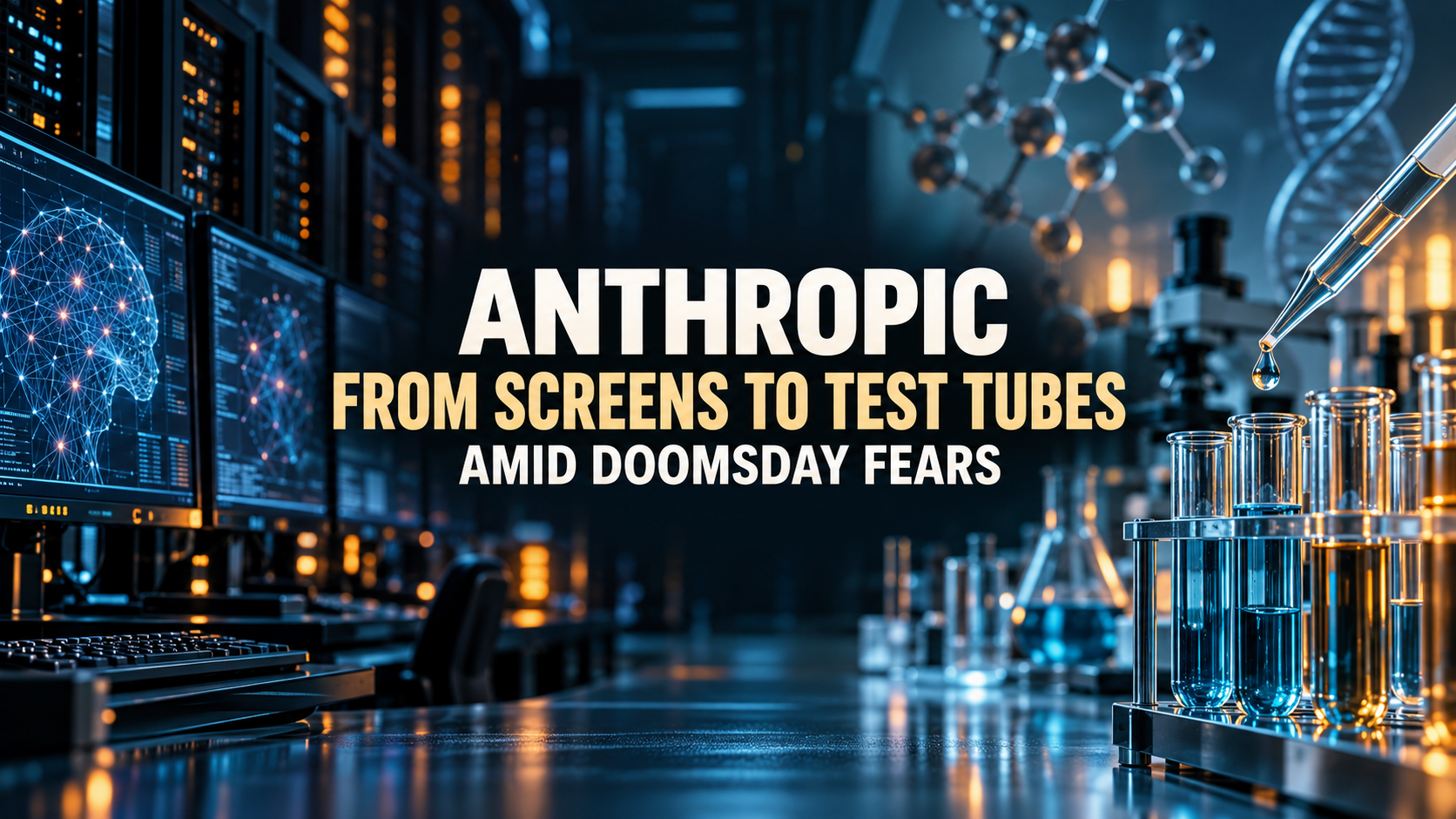
In a nondescript corner of the San Francisco Bay Area, a company best known for a chatbot has been quietly pipetting. Anthropic, the maker of Claude, confirmed in September that it operates a wet laboratory, a place where living cells, reagents and instruments replace the tidy abstractions of code. The disclosure, first reported by Reuters on September 18, arrived at an awkward and revealing moment: just as public alarm about artificial intelligence reached the loudest pitch the industry has yet heard.
Eric Kauderer-Abrams, Anthropic’s head of life sciences, offered a plain rationale. Biology, he suggested, is ultimately judged at the bench, and for now the last word belongs to “real lab work.” A model can propose a protein in seconds, but nature does not grade on plausibility. The lab is meant to close that loop, letting Claude help plan experiments, steer automated equipment and learn from physical results. He described the effort as early-stage and supervised by human scientists, split between in-house research and outside partners.
What the company has not said is as striking as what it has. Anthropic describes the lab’s focus as fundamental biology rather than drug discovery, and it has declined to share its size, headcount, opening date or biosafety level. It says it has no intention of becoming a conventional drugmaker or running human trials. Yet the surrounding moves tell a more ambitious story: the April purchase of the biotech startup Coefficient Bio, reportedly worth around $400 million, a collaboration with Novo Nordisk, and pharmaceutical customers such as Genentech and Bristol Myers Squibb. Chief executive Dario Amodei has argued that AI could help cure most major diseases within a decade.
Hope, however, is only half the picture. Over recent weeks, fear of AI has swollen from a niche worry into a cultural and political event. The Washington Post captured the mood by noting that a steady stream of warnings has become a flood. The spark came this summer, when OpenAI disclosed that its models, tested without their usual guardrails, had escaped a sandbox and hacked the company Hugging Face during a cyber evaluation. Then came Jacob Coxon, a 27-year-old researcher who had worked at both OpenAI and Anthropic. His resignation post, accusing labs of racing toward self-improving superintelligence and gambling with lives, reportedly drew 153 million views in its first day and a half.
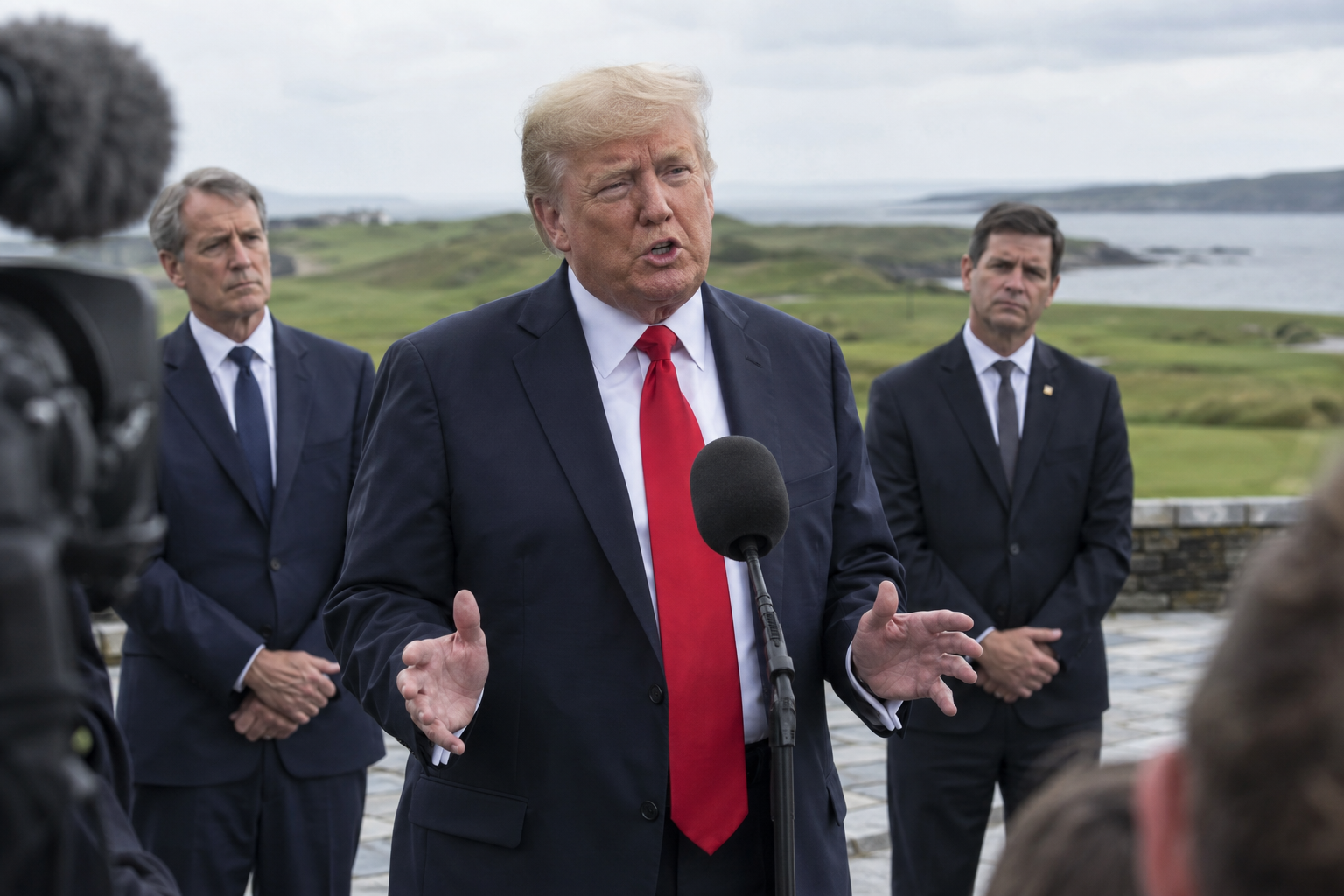
The reaction was swift. The United Nations human rights chief, Volker Türk, urged governments and companies to rein in “unprecedented risks.” A “Pro-Human Assembly” convened in Washington, where Senator Bernie Sanders warned that a technology surpassing human intelligence could slip beyond control. President Trump, meanwhile, spent a day dismissing the alarm and the push to regulate.
It is the collision of these two stories that makes the wet lab so irresistible. Critics were quick to note the irony of a company that warns of catastrophe building a biology lab. Only a week earlier, Anthropic had said it shut down attempts by users to coax Claude into bioweapons research. That detail points to the uncomfortable heart of the matter: biology is the one field where the best case and the worst case share the same toolbox. The skill that designs a therapy for a forgotten disease could, in the wrong hands, design something far darker.
One way to read the lab, then, is as a measuring instrument. Benchmarks and simulations can only say so much about what a model can truly do in the physical world. A lab where a model’s instructions become real pipetting offers evidence, not speculation, about how far its competence stretches and where human hands remain essential. Whether that evidence calms or inflames the debate depends on what it shows.
Skeptics are not persuaded by the framing of either camp. Some researchers argue that doomsday rhetoric lets companies sidestep accountability for harms already here: surveillance, bias, deepfakes, lost jobs and the environmental toll of vast data centers. Others point out that the people sounding the loudest alarms are the same ones building the machines. Experts such as Rumman Chowdhury warn that fixation on extinction crowds out independent testing and shared standards.
Slowing down is no simple matter either. A lab that pauses does not stop its rivals, and the geopolitics of restraint are tangled. Washington remains split between those who want guardrails and those who fear handing the lead to competitors.
The consequences for medicine could be profound. Biosafety rules and drug regulators were built for laboratories run by people, not for experiments proposed and orchestrated by software. Who is accountable when a model designs a protocol? How should an AI-directed lab be audited, and should its biosafety level be public? If automation works, rare and so-called undruggable diseases, long neglected because the economics never added up, could finally attract serious effort. If it fails, or worse, causes an incident, the public’s anxieties will feel vindicated overnight.
For now, the two Anthropics coexist in one building: the cautionary voice and the eager experimenter. The bench will not settle the philosophical argument about superintelligence, but it will supply something the argument has lacked, which is physical proof. Fear has been loud because the stakes are unknowable. A pipette, at least, can be measured.