
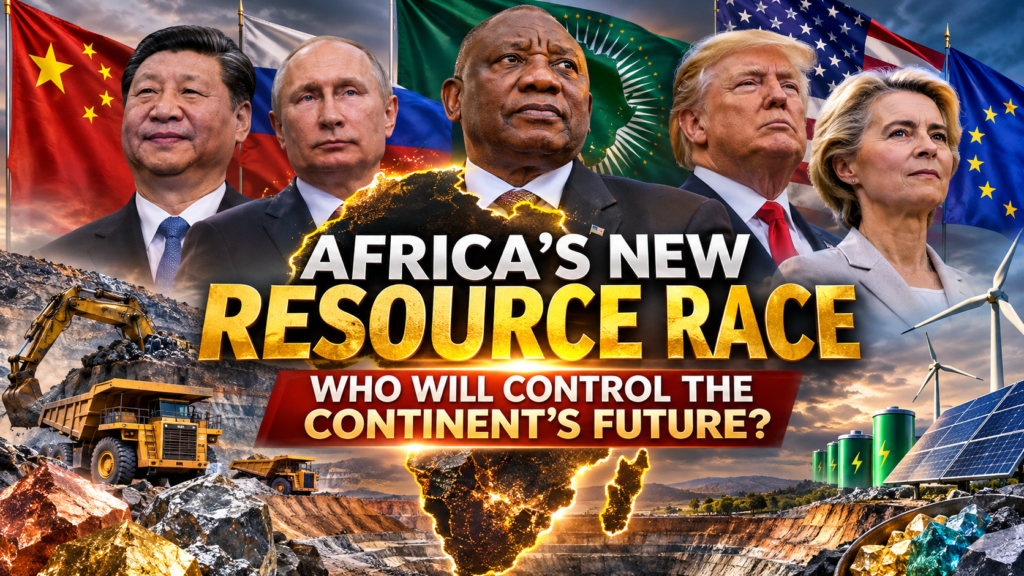
In a copper-cobalt pit near Kolwezi, in the south of the Democratic Republic of Congo, the future arrives as dust. It will be ground, shipped, refined and eventually folded into the battery of a car in Shanghai, a wind turbine off Denmark or a guidance system in a Virginia factory. For a century, that journey began in Africa and ended elsewhere, and the profit followed the second half. In 2026, the continent is trying to rewrite the script.
The scale explains the urgency. Africa is estimated to hold roughly a third of the world’s critical mineral reserves, among them cobalt, lithium, manganese, copper and platinum group metals. The International Energy Agency expects battery demand for cobalt to climb by about 150 percent by 2030, while copper demand could double. Whoever secures these supplies shapes the pace of the energy transition, the price of electric vehicles and the balance of technological and military power.
The Age of the Gate
African governments have discovered that a gate is a form of power. Congo has capped cobalt exports at 96,600 tons a year through 2027, roughly half of earlier volumes, and prices have rebounded sharply. Zimbabwe suspended raw mineral exports in February, then moved to quotas and a coming ban on lithium concentrate. Namibia has barred unprocessed lithium, cobalt and rare earths, and Ghana has begun buying a share of large-scale gold output to build reserves and refining. The message to the world is plain: come and build here, or wait.
Three Suitors, Three Styles
China arrived first and stayed longest. Its companies already own or operate many of the continent’s biggest cobalt and lithium operations, and they dominate the refining that turns ore into industrial material. Washington and Brussels, alarmed by that dependence, now court African capitals with financing, transport corridors and long-term purchase deals. Gulf investors and other newcomers are circling as well. For the first time in living memory, African ministers are selling to a crowded room, and they know it.
Yet leverage is not the same as control. New refineries need cheap, steady electricity that much of the continent still lacks, and even South Africa struggles to process minerals competitively. Bans without power plants, railways, skilled labour and affordable credit can simply freeze output and push buyers toward other suppliers. Zimbabwe’s first lithium sulphate cargo in May was a genuine milestone, but it came from a mine owned by a Chinese company, a reminder that climbing the value chain does not automatically change who owns it.
Governance may decide everything. Contracts signed in secrecy, opaque royalties and officials who treat licences as favours have drained earlier booms, from oil to diamonds. If this cycle is to end differently, citizens will need published terms, independent audits and sovereign funds that turn a depleting asset into lasting schools, grids and savings.
A Moving Target
Technology is a quieter rival. Lithium iron phosphate batteries, which contain no cobalt, now make up more than half of the electric vehicle batteries produced worldwide. Recycling, new chemistries and fresh mines in Australia, Latin America and North America can erode scarcity faster than a ministry can finish a feasibility study. Africa’s window is open, but it will not stay open forever.
The Human Ledger
The human consequences matter as much as the geopolitics. Mining has long brought displacement, pollution, allegations of child labour and revenues that vanish before they reach clinics and schools. Local processing could create factories, engineers and tax bases, but it could just as easily enrich a connected few, or deepen the environmental burden on communities that already live beside tailings dams. Artisanal miners, who supply a meaningful share of Congolese cobalt, risk being squeezed out by quotas and deals struck far above their heads.
There is also a fragile promise in cooperation. The African Continental Free Trade Area has begun carrying minerals, with Namibia’s first lithium shipment under its framework leaving in June. A bloc that negotiated together on standards, taxes and processing hubs would be far harder to divide than fifty-four countries bidding against one another. Competing bans and tax breaks, by contrast, hand buyers their oldest advantage: playing neighbours against each other.
So who will control the continent’s future? The honest answer is that nobody wins this race by digging. Control will belong to those who own the means of making things: the power grids, the ports, the laboratories, the contracts with clear terms and the courts that enforce them. Minerals buried in African soil can fuel another generation of other people’s prosperity. Or, with patience, discipline and unity, they can finally power Africa’s own.