
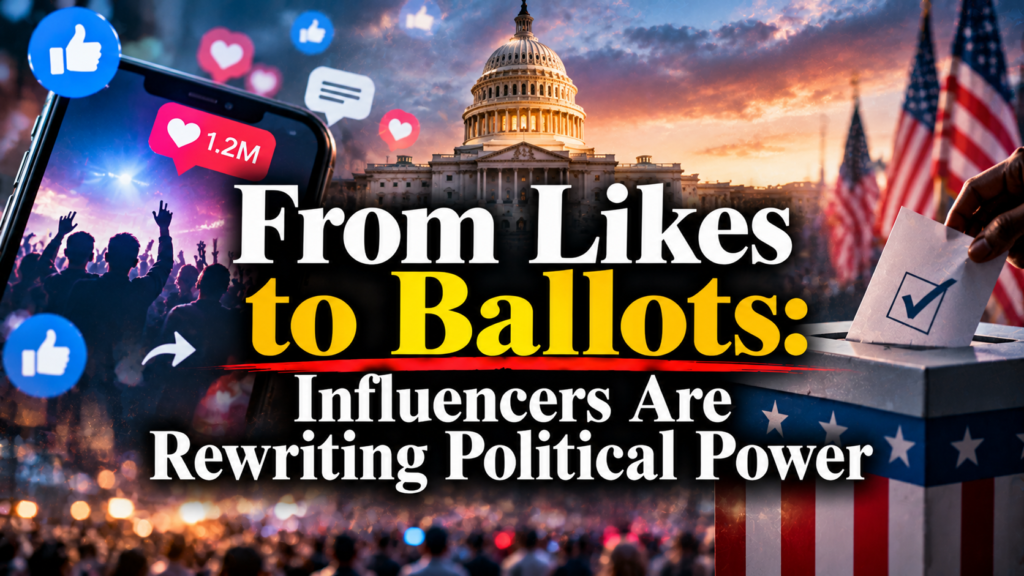
On election night this month, more than 3,400 streaming channels tracked the midterm results, and their traffic ran over four times higher than in 2022, according to figures reported by the industry site Tubefilter. A progressive Twitch streamer drew 1.75 million hours of watch time on his own stream; a conservative creator on Rumble pulled in 461,000. The scene made one thing plain: much of the political conversation now happens on channels no party chairman controls.
Political influencers are not new, but the machinery around them is. The Democratic National Committee says it works with more than 500 creators through an Influencer and Creative program, supplying clips and regular briefings with lawmakers. Republicans have their own network of aligned personalities, and in 2024 Donald Trump sat for long interviews with popular podcasters. Pew Research has found that more than half of American adults at least sometimes get news from social media, so campaigns are following the audience. As one strategist put it, the job is to follow the eyeballs.
What these creators actually do is more varied than the word influencer suggests. Some are national personalities with millions of followers. Others are local voices with fewer than 100,000, hired to explain a ballot measure, remind neighbors about early voting or introduce a city council candidate. Strategists say the smaller ones often work best, because audiences trust them as part of the community rather than as part of a campaign. Trust, in other words, has become the currency, and it is being bought and sold.
That is where the controversy begins. As of now, no federal law requires an influencer to disclose payment from a campaign or party committee, and the Campaign Legal Center says paying creators has become a common tactic of committees and PACs. A viewer watching a friendly explainer may not know it was commissioned. In California, an Assembly bill would fine creators and political committees when paid political posts go undisclosed. Supporters see basic transparency; critics worry about enforcement and about chilling ordinary speech, and the debate is likely to reach other states.
The relationship is also messier than the polished campaign videos suggest. Democratic staffers have told reporters that some creators demanded thousands of dollars for a positive video and hinted they might turn critical if refused. Campaigns, for their part, are wary of giving up creative control. Meanwhile a billionaire candidate for governor of California who spent tens of thousands of dollars on paid partnerships with political influencers still failed to reach the general election, a reminder that reach does not equal votes.
That caution runs through the professional view. A Republican strategist, Eric Wilson, called the creator ecosystem a blunt force object: powerful for national organizations, less precise for local races where every voter matters. The lesson from this cycle is that an influencer can open a door, but cannot supply a message, a record or a reason to show up.
The results themselves illustrate the point. Exit polling reported by NPR showed Democrats carrying voters under 30 by nearly 50 points, a dramatic reversal from 2024, when many young people, especially young men, moved toward Trump. Yet the same reporting points to economics as the main driver: affordability, gas prices, inflation and weak job prospects ranked high among young voters. Whatever the creators contributed, the most consistent explanation is material conditions, and pollsters caution that neither party owns Gen Z. Commentators on the right have blamed viral clips for the swing, while others see ordinary frustration finding a new outlet. The honest answer may be that platforms carry the mood but do not manufacture it.
A subtler consequence is what influence does to the shape of politics itself. A candidate used to speak to a crowd; a creator speaks to a hundred thousand private feeds at once, each framed by an algorithm that rewards outrage. Content built for clicks favors conflict and personality over policy, and incentives to start drama can pull campaigns off their message. Some groups are now offering workshops that help creators learn how to talk about politics without fear of backlash, a sign that the field is professionalizing fast.
There is a democratic upside as well. Creators reach people who ignore newspapers and cable news, explain complicated measures in plain language and encourage first-time voters to register. In a country where turnout among 18-to-29-year-olds hovered near 27 percent this year, any channel that brings a young person to a ballot box has value. The question is whether it does so honestly and with the audience knowing who is paying.
Looking ahead, the 2028 contest will likely feature creator-led events, and reports suggest the Democratic party has considered a creator-hosted primary debate. Expect pressure for clearer disclosure labels, platform ad rules that cover paid political posts and, perhaps, new professional standards for creators who take political money.
Influence has always followed attention, from pamphlets to radio to television. The new gatekeepers carry cameras in their pockets and answer to nobody but their followers. Whether they enrich public debate or merely monetize it will depend less on technology than on the rules, and the habits of audiences who learn to ask a simple question before sharing: who gains if I believe this?