
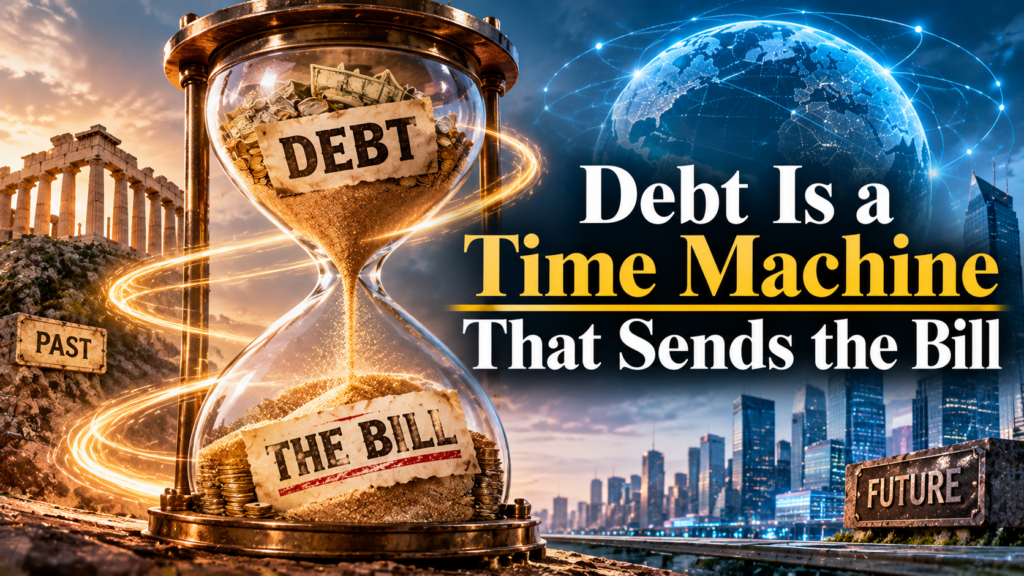
Borrowing money is a kind of time travel. A loan lets a person spend the income of next year, or of the next thirty years, today. It is why a family can buy a home before it has earned the price of one, why a student can enrol before there is a salary, and why a small bakery can buy an oven before the bread it will bake has been sold. The catch is that time machines of this kind always send the bill back.
Debt is far older than coins. Clay tablets from ancient Mesopotamia record loans of grain and silver, and early rulers there were known to proclaim periodic cancellations of debts, to stop farmers losing their land and the social order from cracking. The idea that debts can become so heavy that they threaten a society, and that forgiving some of them can be the sensible course, has echoed through religious teaching and political history ever since.
Not all borrowing is alike. Debt that buys something which grows in value or earns an income, such as a modest home, a useful qualification or productive equipment, can lift a person’s life. Debt that finances consumption, a holiday or a gadget paid for by next month’s salary, only moves the pleasure forward and the cost back. The most important question about any loan is not how big it is, but what it buys, and how much the borrower will pay for the privilege of waiting.
That price is interest, and the headline figure on a loan often hides as much as it reveals. A credit card with a high annual rate can quietly double what a purchase costs if only minimum payments are made. Short-term lenders offering quick cash can charge rates that, once annualised, reach levels few borrowers would accept if the figure were spelled out. The mathematics that makes savings grow over decades works just as faithfully against those who owe: interest on unpaid interest turns a manageable sum into a spiral.
The human consequences are rarely mentioned in loan agreements. Debt stress has been associated with poor sleep, anxiety and strained relationships, and people struggling with repayments often delay seeing a doctor or avoid opening letters, which makes the problem worse. For young adults in many countries, student loans and high housing costs are changing the order of life, postponing home ownership, family formation or career risks.
Nations borrow too, for roads, hospitals, wars and recessions. Government debt is not inherently reckless; borrowing can smooth a crisis and fund investments that benefit future citizens. But interest has to be paid. When rates rise, a growing share of public budgets can be consumed by servicing old debts, leaving less for schools or clinics. United Nations agencies have warned that billions of people live in countries where governments spend more on interest than on health or education, a reminder that debt is a question of development as much as of accounting.
Between the personal and the national lies a crucial institution: the way a society handles failure. Bankruptcy and debt relief rules decide whether someone who has fallen too far can start again or is chased for life. Harsh systems may protect lenders but trap borrowers in cycles of default, while overly lenient ones may encourage recklessness. Many economists argue that a fair framework, one that balances responsibility with a second chance, makes lending cheaper and societies more resilient.
So how can an ordinary person use debt wisely? Start by knowing the full cost: the annual rate, the fees and the total to be repaid. Borrow for things that will last longer than the loan. Keep a small emergency fund so that an unexpected bill does not become a new loan. When juggling several debts, pay the minimum on all and send the extra money either to the most expensive one, which saves the most interest, or to the smallest, which brings quick wins and motivation.
Talk early. Lenders, utilities and landlords are often willing to arrange a payment plan before arrears pile up, and many countries offer free, independent debt counselling. Be cautious about guaranteeing someone else’s loan, about refinancing that stretches repayment over many more years, and about any offer that arrives with pressure and a deadline.
Policy can help too. Clear, comparable disclosure of costs, limits on predatory rates, fair collection practices and accessible relief for those who cannot recover protect borrowers without shutting the door on credit that many people need. Responsible lending is not about discouraging borrowing; it is about making sure the bill that returns from the future is one the borrower was told to expect.
Used with care, debt is one of finance’s most useful inventions, allowing people to build lives before they can afford them outright. Used carelessly, it mortgages tomorrow’s freedom to pay for today’s wants. Before stepping into the time machine, it is worth asking a simple question: who will be sitting in the seat when the bill arrives, and will they be glad the trip was made?