
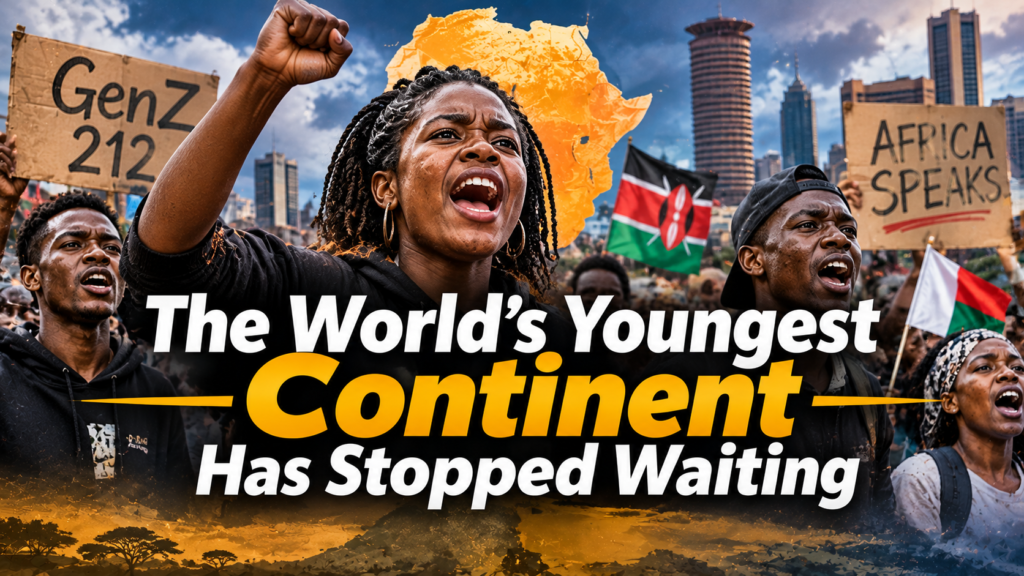
The tear gas had not yet cleared on the evening of June 25, 2024, when the images from Nairobi began circling the world: hundreds of young people in hoodies and backpacks forcing their way into Kenya’s Parliament while lawmakers inside voted on a package of new taxes. There was no rally, no party behind them, no leader to arrest. Just phones, hashtags and a generational anger that African power had not yet learned to read.
Two years later, on June 25, 2026, the same street was sealed off with barbed wire and police cordons. Protesters came back anyway, with flowers and symbolic coffins, to remember the dead; according to an alert from human rights organizations, at least 355 people were detained across the country. That day says a lot about where things stand: the revolt of Africa’s young has not won, but it is not over either.
In Nairobi, after all, the 2024 Finance Bill was withdrawn and President William Ruto dissolved his cabinet. The price, however, was enormous: dozens of victims and a list of arrested and missing people that keeps growing. The 2026 finance bill, according to several analysts, contains provisions that would give the tax authority access to citizens’ personal data without their consent. It is the most modern answer to the digital street: if you cannot stop the march, learn who it is made of.
The contagion followed the geography of phones, not of alliances. In Nigeria, in August 2024, the slogan #EndBadGovernance took to the streets. In September 2025 Madagascar ignited over blackouts and water shortages in Antananarivo; within weeks the protest became the fall of a government. An elite army unit, CAPSAT, sided with the crowd, President Andry Rajoelina left power and a colonel ended up running the country. It is the precedent that unsettles people most: the young opened the door, but it was the military who walked through it.
In Morocco, the GenZ 212 movement, named after the country’s dialing code, was born on Discord and TikTok and, from September 27, 2025, filled the streets of around ten cities with a simple question: why build stadiums for major sporting events while hospitals lack doctors and medicine? The government invited the young to dialogue and promised investment in health and education, while some organizers ended up before judges.
Those who study these movements find a shared grammar. The pirate flag from the manga One Piece, borrowed from Asian protests, in place of party banners. Memes instead of slogans, livestreams instead of rallies, assemblies on servers instead of party offices. And women on the front line, coordinating first aid and information. It is a protest with no address: there is no door to knock on to negotiate. That is both its strength and its curse, because power does not know whom to talk to and the young do not know whom to hand their victories to.
Behind it stands a number that explains almost everything: according to the United Nations, about 70 percent of people in sub-Saharan Africa are under thirty. They were born with a smartphone in hand, are better educated than their parents, and collide with a job market that cannot absorb them, with public budgets choked by debt interest, and with leaders who have held power for decades. They are not asking for the end of democracy. They are asking that it work.
The consequences are already visible. Many governments have learned to slow down the internet, infiltrate messaging groups and portray marches as foreign plots. Investors watch nervously: a Bloomberg Economics model flags Ethiopia, the Central African Republic, Angola and the Republic of Congo among the countries most exposed to unrest in 2026. On the other side, parties are discovering the electoral weight of twenty-somethings: in Kenya, with the 2027 vote on the horizon, nobody can afford to ignore them anymore.
The most uncomfortable question remains: what now? Bringing down a bill does not mean knowing how to write one. In Nairobi people ask whether the movement is dead or merely changing its skin, from hashtags to candidates, from squares to ballot boxes. If the anger does not become organization, the field will be left to those who already have one: armies, old parties, strongmen. If it does, the continent that by mid-century will be home to about a quarter of humanity may finally get a leadership as young as its people.
For now, one image remains: a young man in Nairobi laying a flower on barbed wire. Power has the barbed wire. They have time.