
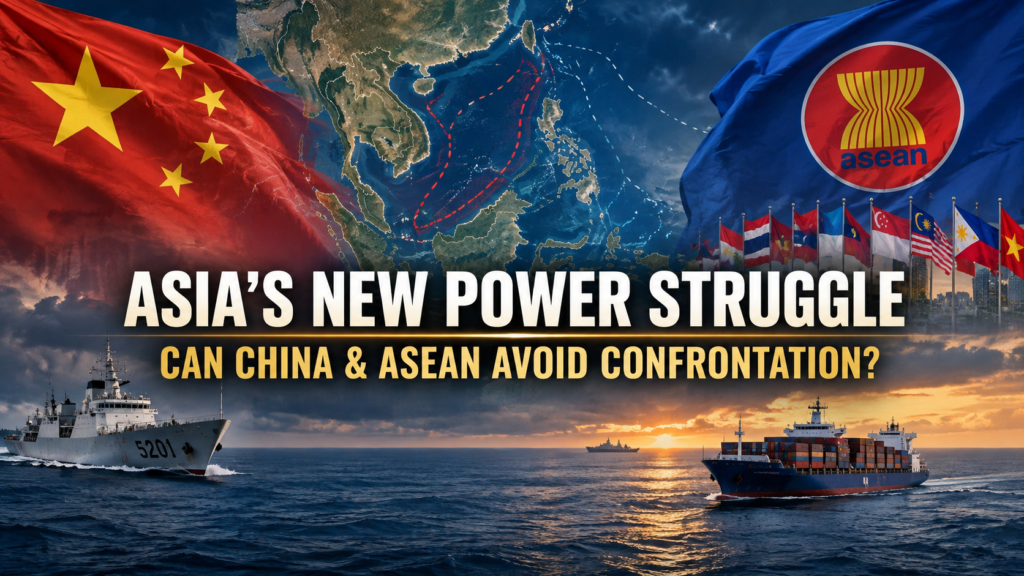
China and the Association of Southeast Asian Nations will gather in Manila next week without the one deliverable both sides promised for 2026: a finished code of conduct for the South China Sea. Three senior diplomats told The Associated Press that roughly 80 percent of the text has been provisionally agreed. The missing fifth, however, holds almost everything that matters.
Negotiations began in 2005, and they still stumble over the same three questions: whether the code will be legally binding, which waters it will cover, and how to define the sensitive terms on which any rule depends. Beijing has long resisted binding language, monitoring and penalties. The Philippines and Vietnam argue that a promise without consequences is only a declaration with better stationery, and the 2002 declaration the code is meant to replace was exactly that.
What turns this stalemate into more than a diplomatic footnote is the sea itself. The incidents that fill the headlines, from water cannons to blocked supply boats to coast guard ships shadowing fishermen near Scarborough Shoal, rarely involve grey warships. They involve white-hulled vessels, which is what makes them dangerous: ambiguous enough to deny, forceful enough to wound. One death or one sunken boat could push Manila to ask whether its defence treaty with Washington applies, and push Washington to answer.
Yet almost nobody in Southeast Asia thinks in terms of simple friends and enemies. China is the largest trading partner for most ASEAN economies, a major source of tourists, infrastructure finance and factory components from Vietnam to Thailand. The same capitals also lean on American security presence and on partnerships with Japan, Australia and Europe. The region has turned hedging into a grammar, with each government speaking in several tenses at once. That flexibility has kept the peace, but it also splinters the bloc’s voice. ASEAN decides by consensus, so any member whose economy is tied closely to Beijing can soften the language for everyone.
The more interesting question is whether a code, even a flawed one, matters less for what it says than for the habits it builds. Hotlines, advance notice of exercises, and rules for how ships behave when they meet at close range are dull mechanisms, yet Cold War history suggests that boring procedures prevent accidents better than grand declarations. A text that is vague on sovereignty but precise on collision avoidance may do more good than one that is ambitious on paper and ignored at sea. Critics answer that a weak code could be worse than none, because it would hand China a signed document to cite as legitimacy while binding no one. Commentators in Jakarta have warned against concluding a pact simply to meet a deadline.
The stakes reach far beyond diplomats. A large share of world trade passes through these waters, along with fisheries that feed millions of coastal families and seabed energy that Vietnam, Malaysia, Indonesia and the Philippines all hope to tap. Every standoff nudges insurance costs upward, discourages joint drilling and pushes governments to buy patrol boats instead of building schools. Fishing communities, who rarely appear at summits, absorb the first blow.
Overlaying everything is the rivalry between Beijing and Washington, which Southeast Asians describe with visible fatigue. They do not want to be the chessboard. But a deadlocked code pushes smaller states toward the arrangements China likes least: deeper military ties with the United States, Japan, Australia and one another, joint patrols, and new arms purchases. Beijing reads each step as encirclement and tightens its grip, which convinces its neighbours that the precaution was justified. It is a security dilemma conducted in slow motion.
Three futures are plausible. In the optimistic one, a narrow but real code arrives in 2027, with crisis communication channels and a face-saving formula on legal status. In the pessimistic one, the deadline slips again until an accident moves faster than diplomacy. The most likely, and perhaps the most corrosive, is a long season of managed tension in which progress is announced in conference rooms while the rules are tested daily at sea.
ASEAN’s real test in Manila is therefore not whether it can fill the last twenty percent in a single summit; it cannot. It is whether its members can resist trading substance for ceremony, and whether China concludes that a rule it helps write restrains its rivals more than it restrains itself. Avoiding confrontation has never depended on agreement over who owns the rocks. It depends on whether both sides still prefer a slow, imperfect conversation to a fast, irreversible mistake. For now, they do. The harder question is for how long.