
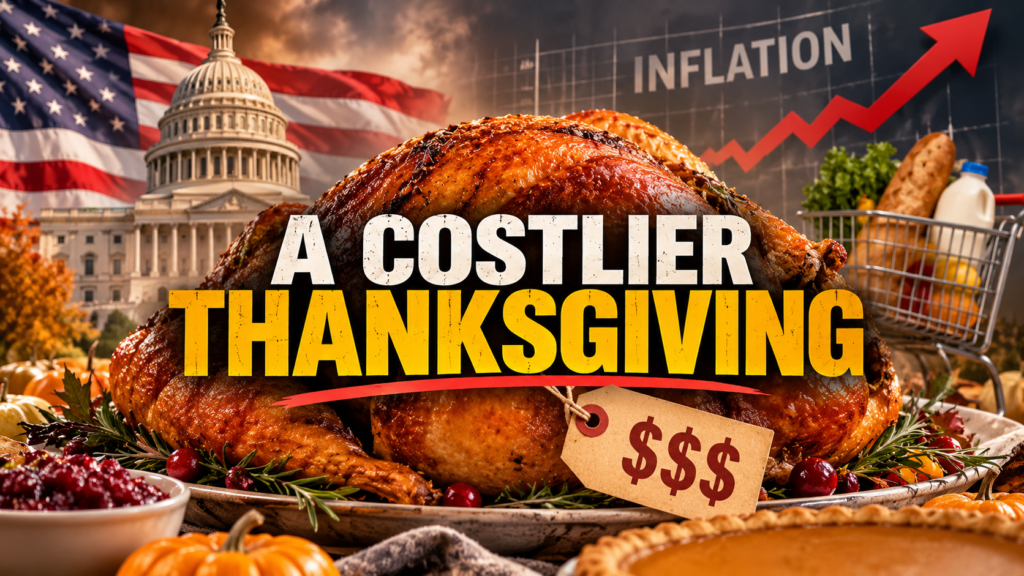
The most American meal of the year will cost about six percent more this Thursday. A survey by the American Farm Bureau Federation puts the average dinner for ten people at $58.63, roughly $5.86 a head, with the 16-pound frozen turkey up 10 percent to $23.68 and cranberries nearly 9 percent dearer. It is the first annual increase since 2022. Yet the same survey holds a surprise: the table remains more than 8 percent cheaper than the 2022 record.
That paradox is the real story. If Thanksgiving is still a relative bargain, why does the country feel so squeezed? Because the turkey is a symptom, not the disease. The Farm Bureau blames strong demand, tight inventories and higher fuel and transport costs, with diesel at record levels. Behind those words sits a war: the American and Israeli strikes on Iran on 28 February sent energy prices climbing, and by September energy was up more than 20 percent from a year earlier. Gasoline has since eased to about $3.87 a gallon, but it was $2.98 the day before the conflict began. The war now shows up in the gravy.
Wider numbers explain the mood. October consumer prices rose 0.4 percent, above forecasts, with food up 0.5 percent and groceries up 0.4 percent. The government cannot publish a clean annual figure for October because last year’s shutdown left a gap in the data, but September’s annual rate was 3.7 percent, up from 3.4 percent in August. Hourly earnings are growing around 3.1 percent a year, and after inflation they were down 0.7 percent over the twelve months to September, the sixth straight year-over-year decline. CBS News calculated that groceries are up 4 percent since November 2024, on top of a 23 percent jump in the four years before.
Washington sees the same economy through a very different lens. National Economic Council director Kevin Hassett called the affordability crisis “a myth” in late October, pointing to Commerce Department figures showing incomes and spending growing faster than prices since January 2025. The administration says Trump’s agenda stopped an inflation crisis inherited from his predecessor and credits tax cuts, nearly twenty trade deals and more than a million private-sector jobs. The latest jobs report offered some support: 165,000 positions added in October, unemployment at 4.1 percent and output growing at a 3.4 percent annual pace over the summer, driven by consumer spending and heavy investment in artificial intelligence.
Critics answer that the averages hide who is doing the spending. Moody’s chief economist Mark Zandi argues that spending holds up because wealthy households are thriving, and Moody’s estimates the top tenth of earners generate about half of all consumer spending. For everyone else, the University of Michigan’s sentiment index sank to 48.0 in October, close to its record low. Economists also trace part of the pain to policy: the New York Fed estimated that tariffs added about 2.9 percentage points to inflation through February, though the Supreme Court struck down the emergency-powers tariffs in February and the president has looked for other routes. Ryan Bourne of the Cato Institute adds a subtler point: shoppers compare today’s prices with those of four or five years ago, not last month’s.
Voters have already rendered a verdict. Democrats won control of Congress in the midterms, partly on promises to lower grocery prices, and the new Congress sits from 3 January. That gives the cost of living an institutional home it did not have before, with hearings, bills and investigations likely to follow. Expect tariffs, energy policy and food-supply chains to be pulled into the spotlight, along with the president’s 2024 promises to cut energy and grocery costs sharply.
The next test arrives even sooner, in the central bank. The Federal Reserve has held its policy rate at 3.75 to 4 percent, and futures markets last put the odds at roughly 89 percent of a quarter-point rise at the 8-9 December meeting. Treasury Secretary Scott Bessent has urged the Fed to treat the oil jump as a one-off supply shock and resist tightening. If the Fed disagrees, mortgages, already near 7.3 percent, and credit-card debt would become costlier just as families open their holiday bills. The cure for inflation could land on the same kitchen table it is meant to protect.
There is a human footnote on the farm. The Farm Bureau notes that producers receive less than six cents of each food dollar, so a pricier bird does not mean richer growers. Their diesel, fertilizer, labor and electricity bills climbed too, which means higher shelf prices can coincide with thinner margins in the fields.
So the turkey on 26 November will be roasted, carved and, for most families, eaten without incident. What lingers is the question around it. An economy can post solid growth and low unemployment and still feel unaffordable to the people living in it. The $5.86 plate is only a measure of what the meal costs. The harder number is how much patience is left once the leftovers are gone.